Blackberry Leaf: A Tannin-Rich Botanical with Deep Caucasus Roots
When buyers think of blackberry (Rubus fruticosus), the fruit usually comes to mind first. Yet for the pharmaceutical, cosmetic, and nutraceutical industries, it is the leaf — Rubi fruticosi folium — that carries the most defensible, well-documented value. Rich in astringent tannins and a broad polyphenol profile, blackberry leaf has a recognized place in European phytotherapy and a living tradition in the mountains of Georgia.
This is the newest addition to the BioGroup catalog: Blackberry Leaf (Botanical Monograph No. 57, Cat. No 057, Specimen 06), wild-harvested from the broadleaf belts of Samtskhe-Javakheti, Georgia. Below we set out the botany, phytochemistry, recognized uses, industrial applications, and the quality framework that makes Georgian leaf a credible raw material for serious manufacturers.
Botanical Identity & Caucasus Origin
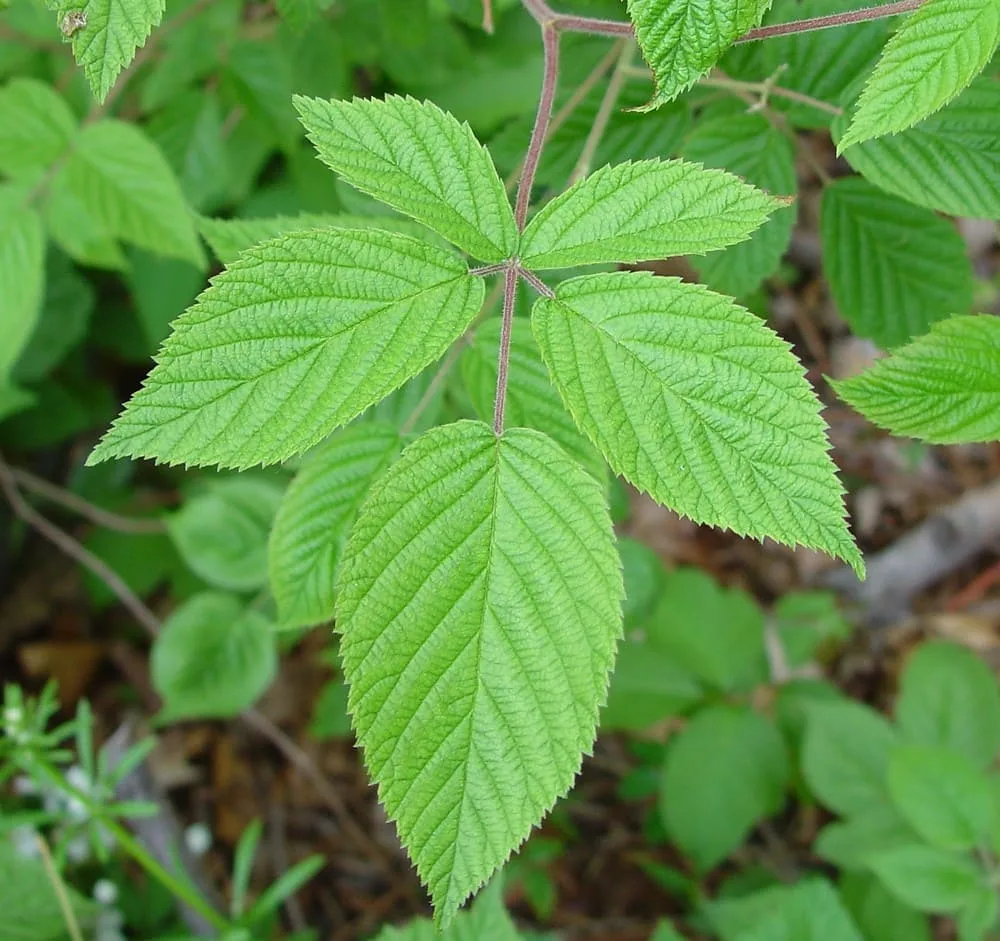
Blackberry is a thorny, scrambling shrub (a “bramble”) in the rose family. The European blackberry is treated as a complex species aggregate, which is why the most defensible botanical identity for Georgian wild-harvested material is “Rubus fruticosus L. (aggregate) / Rubus caucasicus Focke — blackberry leaf (folium).” Naming both the aggregate and the regional Caucasian taxon keeps the declaration honest and audit-ready.
In Samtskhe-Javakheti, blackberry grows wild throughout the Caucasus mixed-forest habitat. The broader habitat spans roughly 400–2,200 m in altitude, with blackberry itself concentrated in the lower broadleaf and middle belts at approximately 400–1,500 m (Caucasus mixed forests; Rubus caucasicus profile). For peak astringent content, the young, pre-flowering leaves are gathered in late spring, typically May–June, before flowering and fruit set (Herbal Reality; Windellama Organics; Ewalia).
Phytochemistry & Active Compounds
The leaf’s pharmacology is driven overwhelmingly by hydrolysable tannins (ellagitannins) — the dominant constituent class and the primary astringent active. The signature ellagitannins are sanguiin H-6, lambertianin C, and casuarinin, the same polyphenol family responsible for much of the antioxidant capacity reported across the Rubus genus (Rubus fruticosus review, MDPI/PMC).
Key markers and their documented ranges:
- Total tannins (canonical quality marker, expressed as pyrogallol): 5–14% of dry leaf (Altmeyers, Rubi fruticosi folium)
- Total ellagitannins (dominant phenolic fraction, wild Rubus leaves): 51.59–255.01 mg/g dry matter (mean 165.84 mg/g; roughly 5–25% of dry mass) (PMC6272394)
- Ellagic acid (premium HPLC secondary marker, whole dried leaf): ~1,574–2,875 mg/kg dry weight (~0.16–0.29%) (ScienceDirect)
- Total phenolic content (gallic acid equivalents): 83.02–334.24 mg/g dry matter (PMC6272394)
- Total flavonoids (secondary marker, dried leaf): 0.46–1.05% of dried leaf mass (PMC6271759; PMC6272394)
Beyond tannins, the leaf carries a well-rounded supporting cast:
- Flavonol glycosides dominated by hyperoside (quercetin-3-O-galactoside), plus quercetin, kaempferol, rutin, and isoquercetin
- Flavan-3-ols: (+)-catechin and (−)-epicatechin — the building blocks of condensed tannins
- Phenolic acids: gallic, caffeic, and p-coumaric
- Organic acids: malic, citric, isocitric, oxalic, and succinic
- Vitamin C (ascorbic acid): qualitatively present, but not reliably quantified for the leaf — BioGroup does not publish a figure that is not backed by a lot-specific laboratory result (PMC4127818)
Traditional & Recognized Uses
A key buyer concern is regulatory defensibility, so it is worth being precise. There is no EMA/HMPC, ESCOP, or European Pharmacopoeia monograph specific to blackberry leaf — that EMA/HMPC monograph belongs to the sister species, raspberry leaf (Rubus idaeus folium), not to blackberry. The recognized quality standard for blackberry leaf is the German Drug Codex (DAC), and the approved-use anchor is the German Commission E.
On that basis, the traditional, recognized uses are:
- Internal astringent for non-specific, acute diarrhoea — a German Commission E approved use (Altmeyers; PeaceHealth)
- Gargle / mouthwash for mild inflammation of the oral and pharyngeal mucosa — sore throat, sore gums, and mouth ulcers — a German Commission E approved external use
- Topical wash for minor wounds, as a traditional antiseptic and vulnerary (historical use)
- Caffeine-free fermented (oxidised) leaf tea — a Caucasus / Georgian mountain tradition of hand-rolling and fermenting wild fruit-bush leaves as a black-tea alternative (Georgian Tea Makers)
The recognized traditional internal daily dose (German Commission E) is 4.5 g of dried leaf per day, taken as an infusion/tea or as a gargle (Altmeyers; PeaceHealth).
Modern research adds context but not regulatory weight: antioxidant, antimicrobial, anti-diabetic, and wound-healing properties of Rubus leaf are supported by laboratory and preclinical (in vitro / animal) research, not clinically proven in humans (PMC6271759). We present them as exactly that — promising mechanistic and preclinical signals.
Applications by Industry
Pharmaceutical
Tannin-rich dried leaf and extracts for traditional astringent and anti-diarrhoeal preparations, and for oral/pharyngeal gargle and mouthwash formulations. The defensible positioning is German Commission E approval — not EMA/HMPC registration, which covers only raspberry leaf.
Cosmetic
Marketed under the INCI name Rubus Fruticosus (Blackberry) Leaf Extract, typically an aqueous extract at a 2–5% use level. As a natural, tannin-driven astringent it suits toners, oral-care products, aftershaves, and pore-refining and tissue-firming skincare, where the tannins deliver tightening and astringent performance (CONIUNCTA).
Nutraceutical
Whole-leaf, cut-and-sifted, and 60–80 mesh powder for single-herb and blended herbal teas, fermented black-tea-style leaf tea, and capsules, functional foods, and beverages that emphasise polyphenol and ellagitannin content.
Safety & Defensibility
Blackberry leaf’s cautions are tannin-driven, not toxicity-driven. The aqueous leaf extract is of low acute toxicity, with an LD50 of approximately 8.1 g/kg body weight in animal studies (PMC4127818). Practical guidance:
- Astringent tannins can cause nausea or GI upset in sensitive individuals — take with food and avoid prolonged high doses
- Tannins bind non-heme iron, so intake should be separated from iron-rich meals and supplements (vitamin C partly offsets this) — relevant for pregnant women, vegetarians, and those with heavy menstruation
- No pregnancy/lactation safety studies exist — advise caution and professional guidance; not recommended under 18
- No specific drug interactions are documented
- Persistent diarrhoea (more than 3–4 days) or bloody stools warrant medical care
Quality & Sourcing from Georgia
BioGroup’s Blackberry Leaf is wild-harvested from the mixed forests of Samtskhe-Javakheti, then shade-dried or low-temperature dried at 50–60 °C to preserve heat-sensitive polyphenols and vitamin C. BioGroup does not yet operate its own laboratory and does not issue its own Certificate of Analysis; instead, we provide full traceability to the harvest area and export documentation (phytosanitary certificate, certificate of origin), and we benchmark the material against the published specification and pharmacopoeia targets that a B2B buyer would apply to an oral-use botanical:
- Tannin content (as pyrogallol) — the European Pharmacopoeia 2.8.14 raspberry-leaf method serves as the de facto reference; the literature/pharmacopoeia specification gives a minimum ≥ 5% for the species (Altmeyers)
- Heavy metals (typical specification limits): lead ≤ 5.0, cadmium ≤ 1.0, mercury ≤ 0.1 ppm
- Pesticide residues and microbial limits (WHO oral-use guidance: total aerobic bacteria 10⁵ CFU/g, Enterobacteria 10³ CFU/g, E. coli / Salmonella absent)
- Loss on drying, total ash, and foreign organic matter
For lot-specific results against these parameters, third-party laboratory analysis can be arranged on request. Georgian terroir is the differentiator: clean Caucasus mixed-forest habitat, genuine wild-harvest of the regional Rubus caucasicus, and a centuries-old leaf-fermentation tradition that informs how the material is handled.
Partner with BioGroup
Blackberry Leaf joins Hypericum, Helichrysum, Rosa canina, and Urtica as part of a transparent, direct-from-harvester Georgian supply chain. We supply whole leaf, cut-and-sifted, and powdered grades, with full traceability to the harvest area.
Explore our full product range, see specifications on the Blackberry Leaf product page, or contact us to discuss volumes, specifications, and sampling.