Dandelion: A Bitter, Inulin-Rich Botanical the Industry Takes Seriously
To most people the dandelion (Taraxacum officinale) is a lawn weed. To the pharmaceutical, nutraceutical, and cosmetic industries it is one of the better-documented traditional botanicals in Europe — a plant with a genuine medicines-agency monograph, a recognised bitter-digestive role, and a root that stores one of the most sought-after prebiotic fibres in functional nutrition.
This is the latest addition to the BioGroup catalog: Dandelion (Specimen 05), wild-harvested from the high meadows and subalpine pastures of Samtskhe-Javakheti, Georgia. Below we set out the botany, phytochemistry, recognised uses, industrial applications, and the honest quality framework behind Georgian wild-harvested dandelion — a companion piece to our guide on Blackberry Leaf.
Botanical Identity & Caucasus Origin
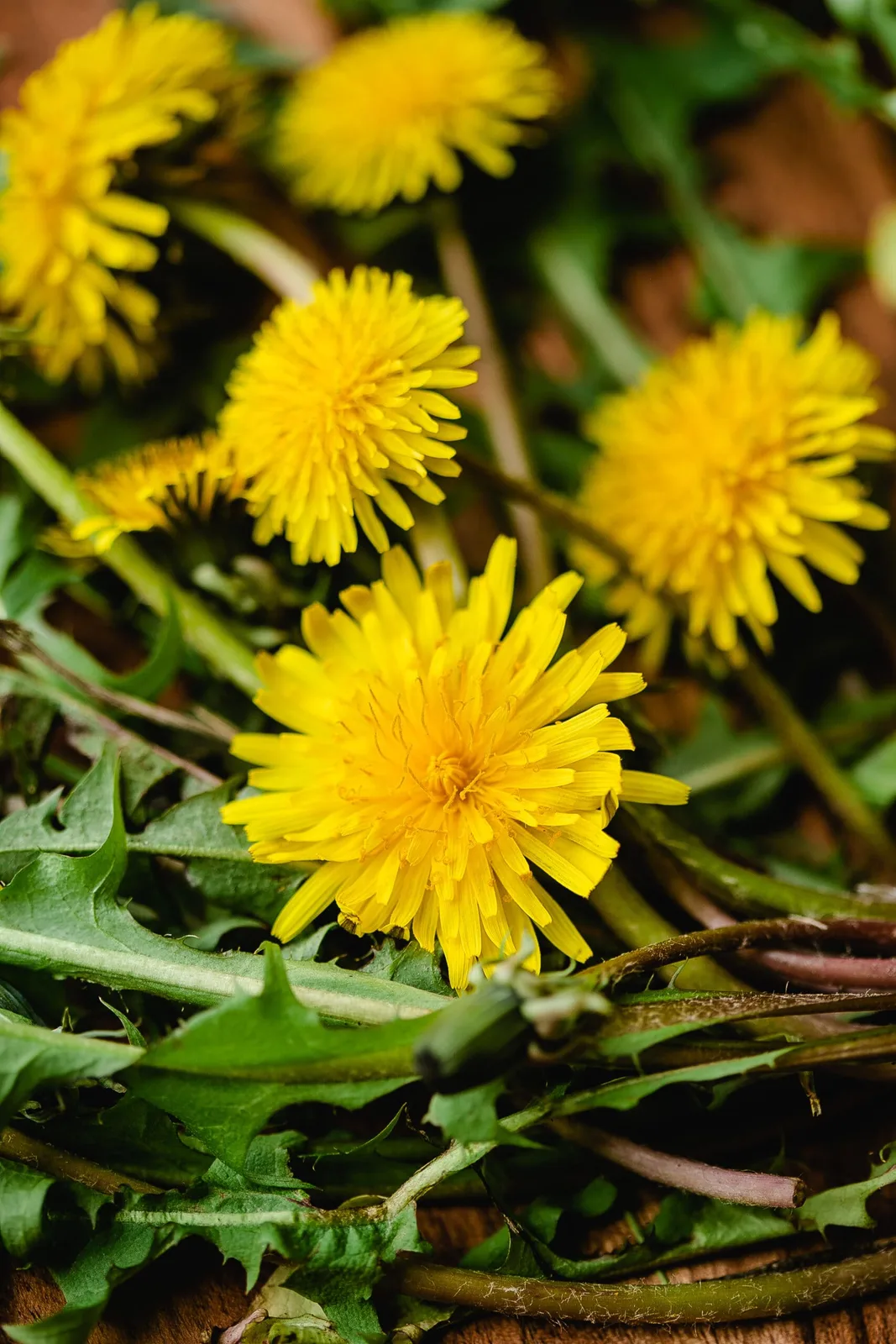
Dandelion is a perennial of the daisy family (Asteraceae), with a thick taproot, a basal rosette of deeply toothed leaves — the “lion’s tooth” that gives the plant its name — and a single golden composite flower head that matures into the familiar pappus “clock.”
Like blackberry, dandelion is taxonomically complex: Taraxacum reproduces largely by apomixis (seed set without fertilisation), which has generated hundreds of microspecies. The most defensible declaration for wild-harvested material is therefore “Taraxacum officinale F.H. Wigg. (aggregate) — dandelion.” Three plant parts are used commercially and are recognised separately in the European monographs: the root (Taraxaci radix), the leaf/herb (Taraxaci folium / herba), and the combined root-and-herb (Taraxaci radix cum herba).
In Georgia the plant is known as ბაბუაწვერა (babuatsvera). It grows wild and abundantly across the volcanic grasslands and pastures of Samtskhe-Javakheti — especially the high plateaux of the Ninotsminda and Akhalkalaki districts and the meadows around Adigeni and Borjomi. Harvest is split by plant part to capture each at its peak: tender leaves in spring, and roots in autumn, when the plant has finished moving its carbohydrate reserves down into storage.
Phytochemistry & Active Compounds
Dandelion’s value is split between its two main organs, and they are chemically quite different (comprehensive review, Springer 2021; Taraxacum vegetal-organs review, PMC).
The root — storage carbohydrate and bitterness:
- Inulin — a fructan storage carbohydrate and recognised prebiotic soluble fibre. Its content is strongly seasonal: autumn-dug roots can reach roughly 25–40% inulin by dry weight, declining sharply in spring as the plant mobilises reserves for growth — which is exactly why roots are lifted in autumn and early winter for extract and powder production (HerbaWave; A Modern Herbal, Grieve).
- Sesquiterpene lactones — the characteristic bitter principles (taraxinic acid and its glucoside, taraxacolide-O-β-glucopyranoside, 11β,13-dihydrolactucin, ixerin D). These are the dominant bitter source and the constituents most associated with dandelion’s digestive and choleretic (bile-stimulating) tradition (Taraxaci herba review, PMC).
- Triterpenes and phytosterols — taraxasterol, taraxerol, β-sitosterol, and stigmasterol; taraxasterol in particular is studied for anti-inflammatory and antioxidant activity in preclinical work.
The leaf — phenolics, flavonoids, and minerals:
- Hydroxycinnamic acids dominated by chicoric acid (cichoric acid) — the principal phenolic of the aerial parts — plus chlorogenic and caffeic acids.
- Flavonoids: luteolin and luteolin-7-O-glucoside, quercetin glycosides, and chrysoeriol.
- Carotenoids (including lutein) and potassium, with vitamins A, C, and K qualitatively present.
A note on figures: dandelion leaf is often described as nutrient-rich, but reliable, lot-specific vitamin and mineral numbers depend on origin, season, and drying. BioGroup does not publish a figure that is not backed by a lot-specific laboratory result.
Traditional & Recognised Uses
Dandelion is unusually well-anchored for a “folk” herb. Unlike blackberry leaf, dandelion holds full European Medicines Agency (EMA/HMPC) traditional-use herbal monographs — covering the root-and-herb, the leaf, and (in a later monograph) the root on its own (EMA: Taraxaci radix cum herba; EMA: Taraxaci folium; EMA: Taraxaci officinalis radix).
The EMA/HMPC traditional-use indications for the root-and-herb are:
- Relief of symptoms related to mild digestive disorders — feeling of abdominal fullness, flatulence, and slow digestion;
- Temporary loss of appetite (the bitter, appetite-stimulating role);
- To increase the amount of urine to achieve flushing of the urinary tract, as an adjuvant in minor urinary complaints.
These align with the older anchors: the German Commission E approved dandelion root and herb for dyspeptic complaints, loss of appetite, and disturbances in bile flow, and the European Scientific Cooperative on Phytotherapy (ESCOP) recognises dandelion root for “the restoration of hepatic and biliary function, dyspepsia and loss of appetite” (Altmeyers: Taraxaci radix cum herba; EBSCO: dandelion’s therapeutic uses).
Modern research adds context but not regulatory weight: antioxidant, anti-inflammatory, hepatoprotective, anti-diabetic, and anti-tumour activities of dandelion are supported by laboratory and preclinical (in vitro / animal) studies, not proven in human clinical trials (PMC). We present them as exactly that — promising mechanistic and preclinical signals.
Applications by Industry
Pharmaceutical
Root extract (Taraxaci radix) and root-and-herb preparations for traditional digestive, choleretic, and bitter-tonic formulations, and mild-diuretic (“aquaretic”) preparations for flushing the urinary tract. The defensible positioning here is strong — a genuine EMA/HMPC traditional-use monograph plus Commission E and ESCOP recognition.
Cosmetic
Marketed under the INCI names Taraxacum Officinale (Dandelion) Extract, Taraxacum Officinale Leaf Extract, and Taraxacum Officinale Rhizome/Root Extract. As a polyphenol- and flavonoid-rich botanical antioxidant, it is used in anti-ageing, brightening, and soothing skincare, valued for skin-conditioning and tone-evening performance (INCIDecoder; SpecialChem).
Nutraceutical & Food
The most distinctive opportunity sits here:
- Inulin-rich autumn root as a prebiotic soluble-fibre ingredient for supplements and functional foods.
- Roasted dandelion root as a naturally bitter, caffeine-free coffee substitute — a long-standing traditional product — and as a base for digestive and detox teas.
- Whole leaf, cut-and-sifted, and powdered grades for single-herb and blended herbal teas; the young leaf also has a culinary tradition as a bitter salad green.
Safety & Defensibility
Dandelion has a long food history — the leaves are eaten as a vegetable across Europe and the Caucasus — and is generally well tolerated. The cautions are specific and bile-related rather than toxicity-driven:
- Contraindicated in bile-duct obstruction, gallbladder empyema, and ileus (intestinal obstruction); with gallstones, use only under professional supervision — because dandelion stimulates bile flow (German Commission E).
- Asteraceae/Compositae allergy — people sensitive to ragweed, daisies, chrysanthemums, or marigolds may react; the milky latex sap and sesquiterpene lactones can cause contact dermatitis.
- As a mild diuretic, there is a theoretical interaction with pharmaceutical diuretics and with lithium; the leaf is notably potassium-rich, which sets it apart from potassium-depleting synthetic diuretics.
- Pregnancy and lactation: robust clinical safety data are lacking — advise caution and professional guidance beyond culinary amounts.
- No serious drug interactions are well documented, but theoretical effects on blood sugar (inulin) and drug metabolism have been raised in preclinical work.
Quality & Sourcing from Georgia
BioGroup’s dandelion is wild-harvested, not cultivated, from the clean high meadows of Samtskhe-Javakheti — a single, high-altitude southern-Georgian region. The harvest is split to capture each part at its peak: leaves are gathered by hand in spring, and roots are lifted in autumn, when inulin reserves and bitterness are highest. Material is then shade-dried or low-temperature dried (around 50–60 °C) to protect heat-sensitive polyphenols, with roots additionally available roasted for coffee-substitute use.
We are direct and deliberately transparent about what we are. BioGroup was founded in 2024 as a small, direct-from-harvester supplier; we do not operate our own laboratory and do not issue our own Certificate of Analysis. Instead we provide:
- Full traceability to the harvest area and the specific district of origin;
- Export documentation — phytosanitary certificate, certificate of origin, commercial invoice and packing list;
- Material benchmarked against the recognised parameters a B2B buyer applies to an oral-use botanical — the EMA/HMPC, Commission E, and ESCOP framework for Taraxaci radix and folium, with third-party laboratory analysis arranged on request for lot-specific results.
The differentiator is the terroir and the method: genuine wild-harvest of dandelion from clean, high-altitude Caucasus meadows, hand-picked, with no pesticides and no chemical fertilizers, and traceable to where it grew.
Partner with BioGroup
Dandelion joins Hypericum, Helichrysum, Rosa canina, Urtica, and Blackberry Leaf as part of a transparent, direct-from-harvester Georgian supply chain. We supply dried leaf, cut and roasted root, and powdered grades, with full traceability to the harvest area.
Explore our full product range, see specifications on the Dandelion product page, or contact us to discuss volumes, grades, and sampling.