Nettle Seed: The Third Nettle, and the Least Understood
Most buyers know two nettles. Nettle leaf (Urticae folium) is the mineral-rich tea and supplement staple. Nettle root (Urticae radix) is the prostate-health raw material with a European regulatory pedigree. Far fewer buyers work with the third: nettle seed (Urticae semen) — a genuinely distinct raw material with its own fatty-acid chemistry, its own applications, and a very different evidence base.
This is Nettle Seed (Botanical Monograph No. 89, Specimen 07) in the BioGroup catalog, wild-harvested from the same mountain nettle stands in Samtskhe-Javakheti, Georgia that yield our leaf — but gathered weeks later, after the plants have set seed. Below: the botany, the phytochemistry, an honest account of what the evidence does and does not support, industrial applications, and the quality framework a serious manufacturer should apply.
Botanical Identity: One Plant, Three Commodities
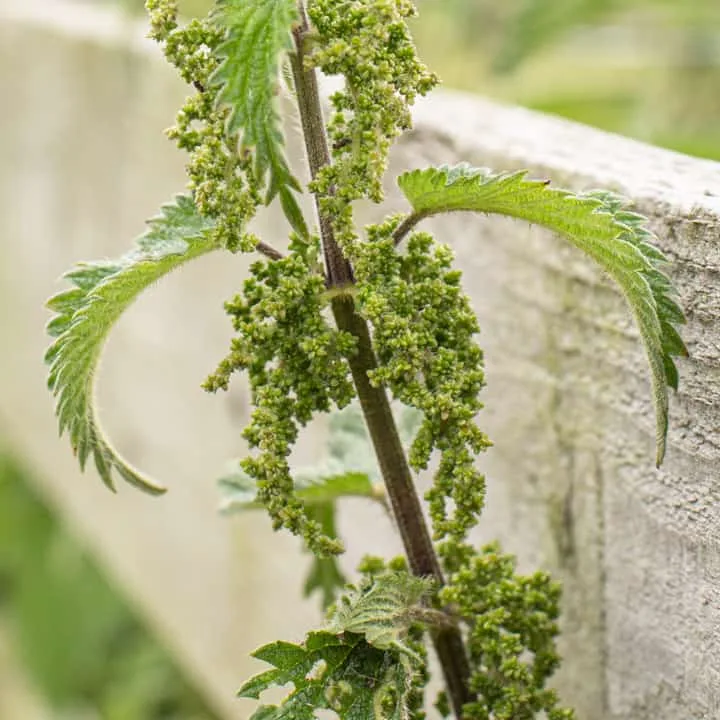
The botanical source is Urtica dioica L. — seed (semen). Strictly, what the trade calls “nettle seed” is an achene: a small, single-seeded dry fruit, harvested as the dense pendulous clusters that hang from the female plants in late summer. Naming it precisely on the specification matters, because the three nettle plant parts are not interchangeable in chemistry, use, or regulatory standing:
| Part | Dominant chemistry | Typical use |
|---|---|---|
| Leaf / herb Urticae folium / herba | Minerals, flavonoids, chlorophyll | Teas, supplements, extracts |
| Root Urticae radix | Lignans, sterols, polysaccharides | Urological preparations |
| Seed Urticae semen | Fixed oil, tocopherols, phytosterols | Seed oil, tinctures, functional foods |
If your specification says “nettle” without naming the part, it is not a specification. For the leaf side of the plant, see our companion guide to stinging nettle leaf and its uses.
BioGroup’s seed comes from wild stands at roughly 600–1,400 m in Samtskhe-Javakheti, hand-stripped in the August–September window once the seed has fully set — well past the pre-flowering stage at which leaf is cut for peak mineral and flavonoid content. The two harvests come off the same meadows in the same season, at different times, which is precisely why wild-harvest operations can supply both credibly.
Phytochemistry & Active Compounds
Nettle seed is, functionally, a small oilseed. That single fact reframes how it should be specified, stored, and sold.
Published compositional analyses report:
- Fixed oil content: ~34.1% of the seed, alongside ~21.8% protein and ~30.2% fibre (Discover Applied Sciences, Springer)
- Linoleic acid (C18:2, omega-6) — the dominant fatty acid. Reported values vary substantially with method and fraction analysed: around 44% of total fatty acids in one whole-oil analysis, a mean of ~63% in another, and ~77.7% within the triacylglycerol fraction specifically (Springer; Natural Product Research)
- Oleic acid (C18:1): approximately 16–22%
- Total polyunsaturated fatty acids: roughly 77–82% of the oil (Natural Product Research)
- Tocopherols (vitamin E group): ~711 mg/kg of oil, with γ-tocopherol predominating (~36%), followed by α-tocopherol (~29%) and δ-tocopherol (~27%) (Natural Product Research)
- Phytosterols: the sterol fraction represents roughly 1.1% of the lipids and is overwhelmingly β-sitosterol (~90% of that fraction); total phytosterols are reported at around 93 mg/100 g of oil (Springer)
- Carotenoids and chlorophyll: present at roughly twice the level found in Urtica pilulifera seed oil, which is what gives cold-pressed nettle seed oil its characteristic green cast (Springer)
Nettle seed is also traditionally described as containing mucilage, and the seed carries a share of the plant’s broader flavonoid and mineral profile. We flag these qualitatively: they are not reliably quantified in the published literature for the seed specifically, and BioGroup does not publish figures that are not backed by a lot-specific laboratory result.
The practical takeaway for buyers: a linoleic-dominant oil at roughly a third of seed weight, protected in the intact seed by a native tocopherol complex. It behaves like an oilseed — and it should be specified like one.
Traditional Uses & the State of the Evidence
This is where honest suppliers and optimistic ones part company, so we will be exact.
There is no EMA/HMPC monograph for nettle seed. The European Medicines Agency’s herbal monographs cover the leaf and herb (Urticae folium/herba — traditional use for minor joint aches and for increasing urine flow to flush the urinary tract) and the root (Urticae radix — for urinary discomfort associated with benign prostatic hyperplasia, stages I–II) (EMA nettle root monograph; Urticae herba/folium overview). The seed is covered by neither. There is likewise no German Commission E monograph and no European Pharmacopoeia article for the seed.
What exists instead is a coherent tradition in Western clinical herbalism, where nettle seed is classified as a trophorestorative — a term for a plant used to nourish and restore the function of a specific organ system, in this case the kidneys and adrenals. Practitioners have used it for low energy, chronic fatigue, and reduced renal function (Herbal Reality).
The most-cited clinical report is Jonathan Treasure’s “Urtica semen reduces serum creatinine levels,” published in the Journal of the American Herbalists Guild in 2003 (4(2):22–25) — a small case series of patients with chronic renal impairment given nettle seed preparations alongside usual care, in which serum creatinine improved (reference record).
We present that for exactly what it is: an uncontrolled case series with small numbers, not a randomized controlled trial. It is a genuine signal and a reason the material has a following. It is not proof of efficacy, and no buyer should build a medicinal claim on it. What nettle seed does have that is fully documented is its compositional profile — the oil, the tocopherols, the sterols. That is a defensible basis for a functional-food or cosmetic ingredient story; the kidney tradition is a herbalist-market story, and the two should not be mixed on a label.
Applications by Industry
Cosmetic & Oleochemical
The primary industrial route is cold-pressed nettle seed oil. A linoleic-rich, tocopherol-bearing oil suits scalp and hair-care formulations, barrier-support and soothing skincare, and facial oils where a light, high-linoleic profile is preferred over oleic-heavy carriers. Nettle’s established reputation in hair care makes the seed oil a natural line extension for brands already using nettle leaf extract.
One regulatory note buyers should verify themselves: the widely listed INCI entries in the cosmetic ingredient dictionaries are for leaf, root, and whole-plant preparations — Urtica Dioica Extract, Urtica Dioica Leaf Extract, Urtica Dioica Root Extract, Urtica Dioica Leaf Powder (INCI Beauty; CosmeticOBS). Confirm the correct declaration for a seed-derived ingredient with your own regulatory team before artwork goes to print. We supply the seed; we do not tell you what to call the finished ingredient.
Nutraceutical & Functional Food
Whole dried seed for tinctures and macerations, seed sprinkles and “superfood” blends, capsules, and encapsulated or cold-pressed oil sold on its essential-fatty-acid and vitamin-E profile. The intact seed is the most stable form to ship and store, which is why we supply whole rather than pre-milled.
Pharmaceutical & Herbal Extract
Raw material for traditional kidney- and adrenal-support herbal preparations and for extraction. The defensible positioning here is traditional use and characterized composition — not monograph status, which the seed does not have.
Safety & Defensibility
Nettle seed has no seed-specific toxicological dataset, so the conservative approach is to apply the cautions established for nettle preparations generally:
- Pregnancy and lactation: conservative sources contraindicate nettle preparations, citing effects on androgen and estrogen metabolism (Drugs.com). Absent seed-specific data, treat as contraindicated.
- Stimulating effect: herbalists consistently report nettle seed as energising, and commonly advise against late-day dosing. This is practitioner observation, not clinical data, but it is consistent enough to be worth passing on.
- No established maximum daily dose exists in any pharmacopoeia for the seed. Buyers formulating a finished product must set and justify their own use level.
- Rancidity is the real quality risk. At ~34% fixed oil with a high polyunsaturated fraction, this is an oilseed. Specify peroxide value and free fatty acids, store cool and dark, and consider nitrogen flushing for pressed oil.
- Standard advice applies: professional guidance for anyone with kidney disease, on diuretics or antihypertensives, or pregnant.
Quality & Sourcing from Georgia
BioGroup’s nettle seed is hand-stripped from wild stands in the mountains of Samtskhe-Javakheti — no spraying, no chemical fertilizers — then dried at low temperature and cleaned of chaff before packing. We keep each batch traceable to the area it came from. Our approach to harvest timing and drying is set out in detail in how we wild-harvest and dry medicinal plants.
We state our limits plainly: BioGroup does not yet operate its own laboratory and does not issue its own Certificate of Analysis. What we provide is full traceability to the harvest area and export documentation (phytosanitary certificate, certificate of origin), and third-party laboratory analysis can be arranged on request. Because there is no pharmacopoeial article for the seed, we recommend buyers build a specification around the parameters that actually govern an edible oilseed:
- Oil content and fatty acid profile (GC), with linoleic acid as the primary marker
- Peroxide value and free fatty acids — the two numbers that tell you whether the lot was dried and stored properly
- Loss on drying / moisture, foreign matter and chaff content, total ash
- Heavy metals (typical specification limits: lead ≤ 5.0, cadmium ≤ 1.0, mercury ≤ 0.1 ppm)
- Pesticide residues and microbial limits (WHO oral-use guidance: total aerobic bacteria 10⁵ CFU/g, Enterobacteria 10³ CFU/g, E. coli / Salmonella absent)
The Georgian advantage here is structural rather than promotional: genuinely wild mountain stands at 600–1,400 m, no agricultural inputs, and a harvest team already working those meadows for leaf — so the seed harvest is an extension of an established route, not a speculative one. The broader case for the region is set out in why source medicinal herbs from Georgia.
Partner with BioGroup
Nettle Seed joins Hypericum, Helichrysum, Rosa canina, Urtica leaf, Taraxacum, Blackberry Leaf, and Eucalyptus in a transparent, direct-from-harvester Georgian supply chain. We supply whole dried seed, cleaned and traceable to the harvest area.
Explore our full product range, see specifications on the Nettle Seed product page, or contact us to discuss volumes, specifications, and sampling.