What Is Stinging Nettle (Urtica dioica)?
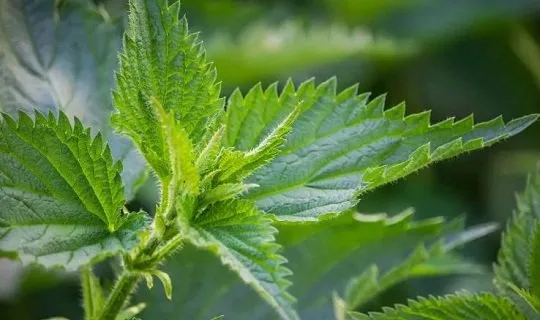
Stinging nettle, Urtica dioica, is a vigorous perennial found across temperate regions, including abundant wild stands in the Georgian Caucasus. Its leaves and stems carry fine hollow hairs that inject a mix of compounds on contact — the familiar sting — which disappears entirely once the leaf is dried or heated. Behind that defence is one of the most nutrient-dense leaves in the herbal trade.
A Genuinely Mineral-Rich Leaf
Nettle’s reputation as a “nutritive” herb is well earned. The dried leaf is a notable plant source of:
- Iron
- Calcium and magnesium
- Silica
Alongside the minerals it carries chlorophyll, carotenoids, and flavonoids such as quercetin. This combination is why nettle leaf is so widely blended into nutritive teas and supplement formulas, and why it is often compared with other mineral-rich greens.
Root vs Leaf: Two Different Products
This is the most important distinction for a buyer to get right. Nettle leaf and nettle root are chemically and commercially distinct:
- Leaf — used for its mineral and nutritive profile, in teas and supplements
- Root — a separate raw material with its own traditional use, historically associated with prostate and urinary support
If your formulation calls for one, the other will not substitute. We are explicit about which part each order contains.
Traditional & Research-Noted Uses
Nettle leaf has a long traditional record as a spring “tonic” green and has been traditionally used to support kidney and urinary flow (an “aquaretic” role) and for joint comfort. These uses appear in herbal monographs and are presented here as traditional and research-noted — not as medical claims from us as a supplier.
Nettle Tea: Preparation & Taste
Dried nettle leaf makes a deep-green, earthy, almost spinach-like infusion. Steep cut & sifted leaf in just-boiled water for 5–10 minutes. Because colour signals careful drying, a vivid green cut is a good visual proxy for quality.
Nettle for Hair & Skin
Nettle leaf has a long cosmetic tradition in hair and scalp formulations and is used as an extract or infusion in natural haircare. The same dried-leaf raw material serves both the beverage and cosmetic channels.
Wild-Harvest & Drying in Georgia
Nettle is best harvested before flowering, in late spring to early summer, when the leaf is at its most tender and mineral-rich. BioGroup hand-cuts wild nettle in Samtskhe-Javakheti at this window and dries it at low temperature to lock in the green colour and leaf integrity — the approach we use across the catalogue, detailed in how we wild-harvest and dry medicinal plants.
Forms & Sourcing
We supply wild Urtica dioica as cut & sifted leaf, leaf powder, and root — pesticide-free, with phytosanitary and origin documentation, and third-party lab testing arrangeable on request. Tea and supplement manufacturers are our core nettle customers.
See the Urtica product page for specifications, browse the catalogue, or contact us to request a sample and a quote.