What Actually Happens Between Your Enquiry and Your Pallet
Most pages that sell bulk botanicals tell you what a plant does. Very few tell you how the transaction works — what sets the minimum quantity, why the lead time is what it is, which three letters you should be writing on your purchase order, and how a sack of dried leaf physically gets from a mountain village in southern Georgia to your warehouse.
This is that page. It is written for procurement, not for marketing, and where a number depends on the season or the species we say so rather than inventing a figure that looks tidy on a website.
If you are drafting the technical side of the same purchase, its companion is our guide to what belongs on a dried herb specification sheet, and the documents that travel with the goods are covered in what paperwork comes with a herb export shipment.
Start With the Harvest Calendar, Not the Lead Time
The single most useful thing a buyer of wild-harvested material can internalise is this: supply is annual, not continuous. A cultivated crop can be planted to meet demand. A wild stand cannot. Each species has one window per year in which the material is worth taking, and everything downstream — availability, price, and how long you wait — is decided by where your enquiry lands relative to that window.
| Species | Part supplied | Harvest window |
|---|---|---|
| St John’s Wort Hypericum perforatum | Flowering tops | July – August |
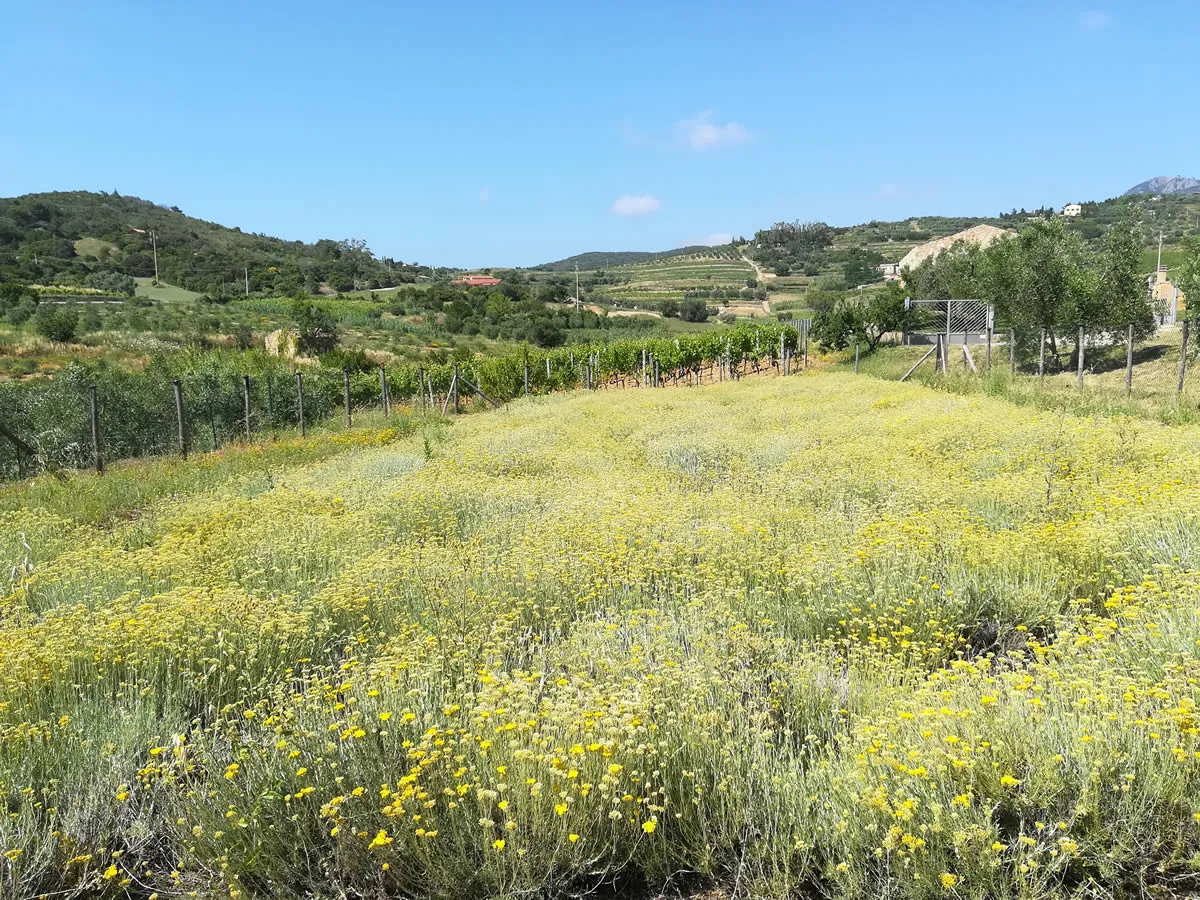
| Immortelle Helichrysum arenarium | Flower heads | July – September |
| Rosehip Rosa canina | Fruit (hips) | September – November |
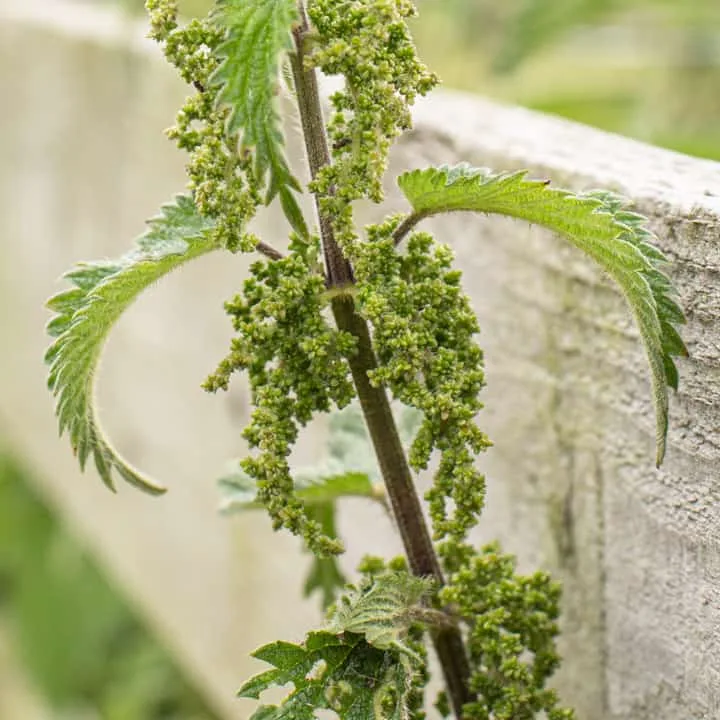
| Stinging Nettle Urtica dioica | Leaf and root | May – July |
| Nettle Seed Urtica dioica | Seed | August – September |
| Dandelion Taraxacum officinale | Leaf (spring), root (autumn) | Spring and autumn |
| Blackberry Leaf Rubus fruticosus | Leaf | Late spring – summer |
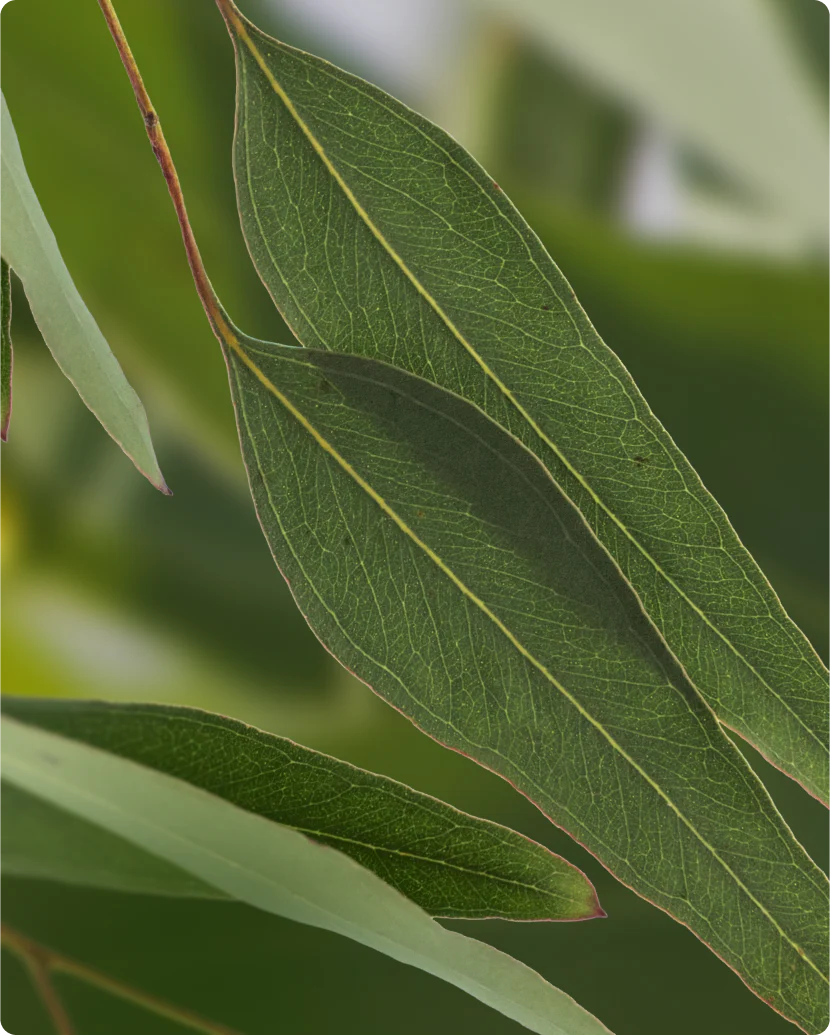
| Eucalyptus Eucalyptus viminalis | Leaf | Year-round |
Two practical consequences fall out of that table.
First, ask early for the current season. An enquiry for rosehip that arrives in June is an enquiry about a crop that has not been picked yet. We can commit volume against the coming harvest — that is normal and it is how wild-harvest supply chains are meant to work — but we cannot ship it in June. An enquiry for the same material in December is asking about material already in store, which is a different, faster conversation.
Second, eucalyptus is the exception that proves the rule. Because Eucalyptus viminalis is evergreen, our eucalyptus leaf has no seasonal cut-off. If your production schedule is continuous and you need a botanical that will not disappear for eight months of the year, that matters more than most buyers realise until the first time it bites them.
The harvest and drying side of this is described in detail in how we wild-harvest and dry medicinal plants.
Minimum Order Quantity: What Actually Sets It
Buyers often ask for “your MOQ” — the Minimum Order Quantity — as though it were a fixed company policy. For a wild-harvested botanical it is not. It is the output of three physical constraints, and knowing them lets you negotiate intelligently instead of guessing.
1. How much a harvest team can gather in the window. Hand-gathering is rate-limited by people and daylight. A species with a three-week window and a dispersed wild stand has a much lower practical ceiling per season than one with a three-month window and dense stands. This is why the honest answer to “how much can you supply?” is species-specific and season-specific.
2. Packaging and pallet economics. Dried herb moves in sacks, sacks move on pallets, and pallets move as whole units. A quantity that does not fill a sensible number of sacks costs disproportionately more per kilogram to pack, document, and ship. The natural commercial step sizes are therefore sack-multiples and pallet-multiples, not round marketing numbers.
3. The freight mode you choose. A courier parcel, a groupage pallet, and a full container each have a different cost floor. Below roughly a pallet, per-kilogram freight cost dominates the price of the goods themselves — a fact that surprises first-time buyers of a light, bulky commodity.
In practice, enquiries tend to fall into three tiers:
- Sample — a few hundred grams to a kilogram, sent by courier for identity, sensory, and laboratory assessment. Always do this first. No specification survives contact with the actual material.
- Trial lot — a modest commercial quantity, typically shipped as one or a few palletised units by groupage or road. This is where you validate that what you tested is what arrives at scale.
- Commercial lot — repeat, contracted volume against a harvest season, shipped palletised or by container.
We quote minimum quantity per species and per season rather than publishing one number for the whole catalogue. A single published figure would be either dishonestly low for the scarce species or needlessly high for the abundant ones. Tell us the species, the part, and the target volume and you will get a real answer for that material.
Lead Times: The Four Clocks
Lead time is not one number. It is four independent clocks, and only the last two are under anyone’s day-to-day control.
Clock 1 — the harvest clock. Zero if the material is in store from the current season; up to a full year if you have just missed the window. This is the clock that dominates everything, and it is the reason experienced buyers of wild botanicals contract ahead of the season rather than shopping after it.
Clock 2 — the drying and conditioning clock. Fresh material has to be dried down and stabilised before it is a tradeable commodity, and shade-drying at low temperature — the method that protects colour, aroma, and volatile oil — is deliberately slower than forced hot-air drying. Days to a couple of weeks depending on species, plant part, and weather.
Clock 3 — the testing and documentation clock. If you require third-party laboratory analysis, the laboratory’s turnaround is a real and often underestimated item. Accredited testing for pesticide residues, heavy metals, or pyrrolizidine alkaloids is typically measured in weeks, not days, and it must finish before the goods move if the result is a condition of shipment. Export documentation is comparatively quick once the material and the tests are ready.
Clock 4 — the transit clock. See the routing section below. From Georgia this ranges from a few days by courier to several weeks by sea with transhipment.
The practical advice: decide early whether laboratory results are a condition of dispatch or a condition of acceptance. Buyers who leave this ambiguous discover the difference at the worst possible moment.
Incoterms 2020: Which Rule to Ask For
Incoterms® 2020 are the International Chamber of Commerce’s eleven standard trade terms, in force since 1 January 2020. They allocate cost, risk, and responsibility between seller and buyer. Choosing the wrong one is the most common avoidable error on a first purchase order.
The rules split into two families (ICC Incoterms 2020 overview; summary of key changes):
| Rule | Transport mode | Where the seller’s risk ends |
|---|---|---|
| EXW — Ex Works | Any mode | At our premises, goods not loaded |
| FCA — Free Carrier | Any mode | On handover to your nominated carrier at a named place |
| CPT / CIP — Carriage (and Insurance) Paid To | Any mode | On handover to the first carrier; seller pays carriage onward |
| FAS / FOB / CFR / CIF | Sea and inland waterway only | Alongside or on board the vessel at the named port |
| DAP / DPU — Delivered at Place / Unloaded | Any mode | At the destination named place |
| DDP — Delivered Duty Paid | Any mode | At destination, with import duty and clearance done by the seller |
Three things worth knowing before you write a term on a purchase order:
FOB and CIF are not general-purpose terms. FAS, FOB, CFR, and CIF apply only to sea and inland waterway transport. If your consignment is going to travel by road through Türkiye, or by air out of Tbilisi, or as a groupage pallet handed to a forwarder inland, then “FOB Poti” is the wrong rule and will create ambiguity about exactly when risk passed. FCA is the correct modern equivalent for containerised, road, air, and multimodal movements — and Incoterms 2020 added an option under FCA for the parties to agree that the carrier issues an on-board bill of lading to the seller, which was the main reason people used to misuse FOB.
CIP and CIF do not buy the same insurance. Under Incoterms 2020, CIP requires the seller to obtain cover at the Institute Cargo Clauses (A) level — broad, all-risks cover — while CIF still requires only the minimum Institute Cargo Clauses (C). For a high-value botanical consignment, that difference is worth reading before you assume “the seller insured it”.
DDP is usually a bad idea for both sides. It makes the seller responsible for import clearance and duty in a country whose rules the seller does not administer. For most cross-border botanical purchases, FCA or CPT/CIP gives clean risk transfer without asking either party to act outside their own jurisdiction.
Routes Out of Georgia
Georgia is a small country with a coastline, a land border with the European Union’s neighbourhood, and an international airport. That gives four realistic ways to move dried botanicals.
Sea, via the Black Sea ports. Poti is the principal container port of the South Caucasus, with Batumi alongside it. Very few mainline services call directly; the normal pattern is a feeder vessel to a Turkish or Romanian hub — Istanbul, Constanța, Varna — and transhipment onto a mainline service from there. Black Sea feeder loops typically deploy vessels of a few hundred to 1,500 TEU and run on multi-weekly or fortnightly rotations (Black Sea feeder services; APM Terminals Poti). Cheapest per kilogram, longest and least predictable in transit, and the transhipment leg is where schedule slippage happens.
Road, through Türkiye. Georgia’s road link into the European Union runs west and south through Türkiye and Bulgaria. For pallet-scale quantities to Central and Western Europe this is often the sensible middle option: materially faster than sea-with-transhipment, and it avoids the container minimum entirely because groupage is straightforward.
Air, from Tbilisi. The right answer for samples and for small, high-value, time-critical lots. Wrong for anything bulky, because dried leaf is charged on volumetric weight rather than actual weight, and the ratio is brutal.
Courier. For samples of a few hundred grams to a couple of kilograms, an integrator parcel is simplest and fastest. Confirm your own country’s rules on plant-material parcels before you ask for one.
Ask your forwarder for a current transit time on the specific lane rather than trusting any published figure, including ours. Black Sea schedules move.
Why Dried Herbs Cube Out Before They Weigh Out
This is the commercial fact that catches out buyers whose experience is in denser commodities, and it deserves its own section.
Dried botanicals are light and bulky. A 40-foot high-cube container offers roughly 76 cubic metres of usable space against a payload of around 26 tonnes. Dried leaf material — depending heavily on species, cut, and how firmly it is packed — sits in the low hundreds of kilograms per cubic metre; published figures for packed dried leaf are around 290 kg/m³ for a dense material like sage, and loose whole leaf or flower heads are considerably lighter than that (reference bulk density).
Run the arithmetic for your own material and you will usually find the same thing: the container fills up long before it gets heavy. At a packed density of 150 kg/m³, a full 40-foot high-cube carries roughly 11 tonnes — well under half its weight limit. At 100 kg/m³, closer to 7.5 tonnes.
Three consequences:
- Freight is priced by the space you occupy, not the weight you ship. Compare quotes on a cost-per-kilogram-landed basis, never on freight cost alone.
- Cut material packs denser than whole material. If your process will comminute the herb anyway, buying it cut can pay for itself in freight — but cutting increases surface area and accelerates loss of volatile oil, so for aromatic species it is a genuine trade-off, not a free win.
- Compression has a ceiling. Baling improves density, but over-compressing whole leaf shatters it into fines, and fines are a quality problem, not a packing win.
Duty: Georgia’s Free-Trade Position
Georgia has an unusually broad free-trade network for a country of its size. It operates a Deep and Comprehensive Free Trade Area (DCFTA) with the European Union, provisionally applied since 1 September 2014, and free trade agreements with China, Türkiye, the EFTA states (Iceland, Liechtenstein, Norway, Switzerland), the United Kingdom, and the CIS countries (Georgia’s free trade regimes; DCFTA rules of origin).
For a European buyer this is not a marketing point, it is a line on the landed cost. Preferential tariff treatment is claimed with a proof of origin — for European Union imports, typically a Movement Certificate EUR.1, issued in Georgia by the Revenue Service, valid for ten months from issue, with the exporter required to retain the supporting evidence for at least three years (Movement Certificate EUR.1, Access2Markets).
Wild-harvested plants gathered in Georgia are about as unambiguous a case of originating status as exists. The paperwork side is covered in full in what paperwork comes with a herb export shipment.
How to Write an Enquiry That Gets a Real Quote
Most enquiries we receive say “please send price for dried herbs”. That cannot be quoted. Here is what a supplier actually needs in order to give you a firm number rather than a range:
- Species and plant part, by botanical name — Urtica dioica leaf, root, and seed are three separate commodities with three separate prices.
- Form and cut — whole, cut and sifted, tea-bag cut, or powder, with the sieve specification if it matters. See the specification guide.
- Quantity and frequency — a one-off trial lot and a recurring annual contract are different commercial propositions and should be quoted differently.
- Target specification — moisture, foreign matter, ash, and any contaminant limits you must meet. If you are working to a customer’s spec, send it.
- Testing requirement — whether you need third-party laboratory analysis, which parameters, and whether the result is a condition of dispatch or of acceptance.
- Destination and Incoterm — the rule plus the named place. “FCA Akhaltsikhe” and “DAP Rotterdam” produce very different quotations.
- Packaging requirement — sack type, net weight per sack, palletisation, and any labelling your goods-in process needs.
- Timeline — when you need it, and whether that date is firm.
Send those eight things and the quotation comes back specific. Send fewer and you get a range, which helps nobody.
Partner with BioGroup
We are a direct-from-harvester supplier of wild-harvested Georgian botanicals — St John’s Wort, Immortelle, Rosehip, Nettle, Nettle Seed, Dandelion, Blackberry Leaf, and Eucalyptus — gathered by hand, dried at low temperature, and traceable to the harvest area.
We state our limits as plainly as our strengths: BioGroup does not yet operate its own laboratory and does not issue its own Certificate of Analysis. We provide traceability to the harvest area and export documentation, and independent third-party laboratory analysis can be arranged on request.
Contact us with the eight points above and we will come back with quantities, timing, and a delivered price for your lane. For background on the region and the material itself, see why source medicinal herbs from Georgia.