Why the Spec Sheet Is the Contract
Everything else in a botanical purchase is negotiable until the goods arrive. The specification is what decides who is right when they do.
A loose specification — “good quality dried nettle leaf, low moisture” — is not a specification. It is an argument waiting to happen at a bonded warehouse, with your production schedule as the hostage. A tight one names the parameter, the limit, and the test method, because on several of the parameters below two laboratories using two different accepted methods will legitimately return two different numbers on the same lot.
This guide walks through what belongs on a dried herb specification, what realistic numbers look like, and where the traps are. It is the technical companion to buying bulk dried herbs from Georgia and to what paperwork comes with a herb export shipment.
1. Identity: Get This Right or Nothing Else Matters
Every parameter below is meaningless if the specification does not first pin down exactly what the material is.
- Botanical name with authority — Hypericum perforatum L., not “St John’s Wort”. Common names are ambiguous across languages and markets.
- Plant part, ideally with the Latin trade name — folium (leaf), herba (aerial parts), flos (flower), fructus (fruit), radix (root), semen (seed). This is not pedantry: Urtica dioica leaf, root, and seed are three different commodities with three different chemistries and three different prices.
- Form — whole, cut, tea-bag cut, powdered.
- Wild-harvested or cultivated, and the harvest region.
- Harvest season and year — a dated crop year is the backbone of traceability and the first thing a serious auditor asks for.
- Intended use — food, food supplement, herbal medicinal product, cosmetic, or extraction feedstock. It determines which regulatory framework the rest of the spec has to satisfy.
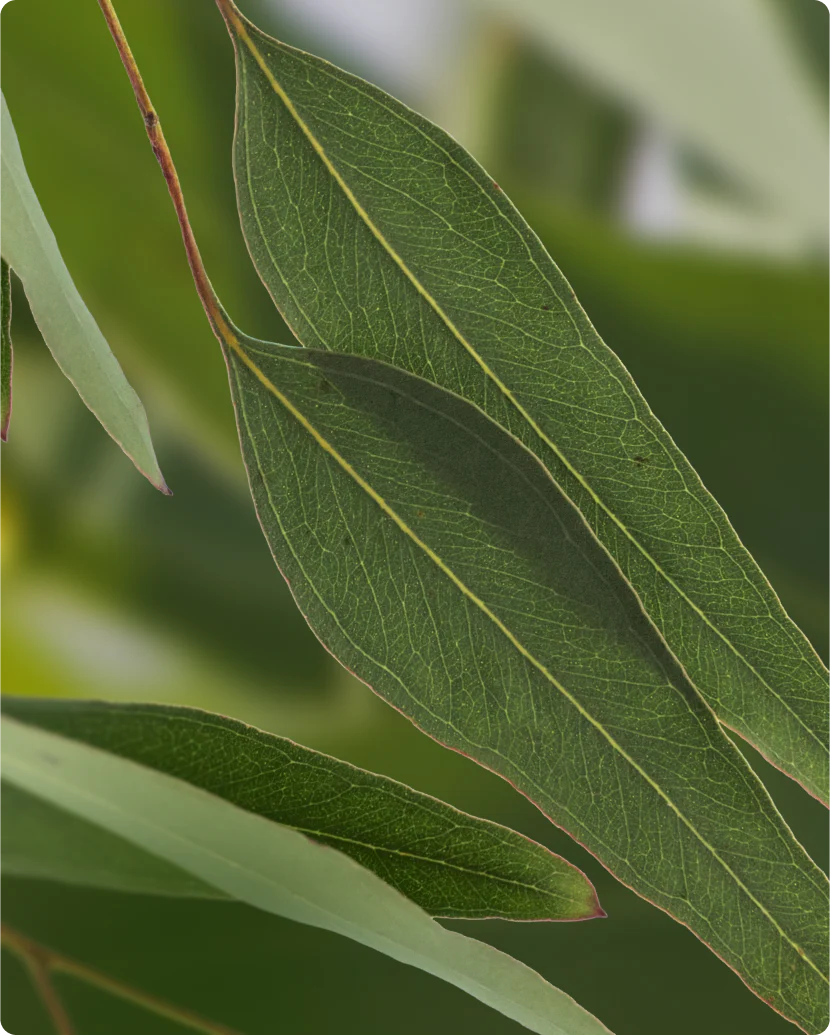
One more identity point that catches buyers out: some botanicals have a pharmacopoeial identity that is narrower than the common name. The European Pharmacopoeia article for eucalyptus leaf, for instance, is defined as Eucalyptus globulus specifically — which is why our Eucalyptus viminalis is traded on its own identity and must never be declared as pharmacopoeial eucalyptus leaf. Check whether the monograph you are citing actually covers the species you are buying.
2. Moisture and Water Activity
Moisture is the parameter that controls everything else. Too high and you get mould, mycotoxins, caking, and a weight you paid for that is really water. Too low and brittle leaf shatters into fines during handling.
Typical maximum for leafy dried herbs: 8–13% depending on species. The European Spice Association’s Quality Minima Document is the best public anchor for what realistic numbers look like (ESA Quality Minima, Rev. 5):
| Herb | Max moisture % | Max total ash % | Max acid-insoluble ash % |
|---|---|---|---|
| Parsley | 7.5 | 14 | 1.5 |
| Laurel (bay) leaves | 8.0 | 7.0 | 2.0 |
| Rosemary | 10 | 8.0 | 1.0 |
| Basil | 12 | 16 | 2.0 |
| Oregano | 12 | 10 | 2.0 |
| Sage | 12 | 12 | 2.0 |
| Thyme | 12 | 12 | 3.5 |
| Spearmint | 13 | 12 | 2.5 |
None of the species we supply appear in that table — they are medicinal rather than culinary — but the pattern is the point: a leafy dried herb that will not sit under about 12–13% moisture has not been dried properly, and the ash figures show how wide the legitimate species-to-species spread is.
The method matters more than most buyers realise. Two accepted approaches will disagree:
- Loss on drying (European Pharmacopoeia general chapter 2.2.32; oven method) measures everything volatile that leaves the sample — which, for an aromatic herb, includes the essential oil you are paying for. Specify loss on drying on a cineole-rich or thymol-rich leaf and you may fail your own limit on a perfectly good lot.
- Azeotropic distillation (Ph. Eur. 2.2.13) and the ESA-recommended entrainment method (ISO 939:1980) separate the water from the volatiles and give a truer water figure for aromatic material.
- Karl Fischer titration is the most specific for water but needs a suitable sample preparation for a fibrous plant matrix.
Rule: for aromatic species, specify a water-determination method, not loss on drying. For non-aromatic leaf and root, loss on drying is fine and cheaper.
Add water activity (aw) to the spec. Moisture tells you how much water is present; water activity tells you how much of it is available to microorganisms, which is what actually governs mould growth. ESA recommends a target of maximum 0.65. It is a cheap test, it is a far better predictor of storage stability than moisture alone, and a lot that passes on moisture but fails on water activity is a lot that will surprise you three months into its shelf life.
3. Cut and Sieve Size
“Cut and sifted” is a trade description, not a specification. Two suppliers’ cut and sifted material can differ by a factor of four in particle size.
The common grades, roughly:
- Whole — intact leaves, flower heads, or hips. Best appearance, best volatile-oil retention, worst packing density.
- Cut and sifted (C/S) — roughly 10 to 40 US mesh, i.e. about 2.0 mm down to 0.42 mm, most commonly targeted around 0.85–2.0 mm.
- Tea-bag cut (TBC) — around 1 mm, sized for filter paper and fast infusion.
- Powder — specified by the mesh through which the whole sample passes.
Specify it numerically. The defensible form is a two-sided statement based on a sieve test (European Pharmacopoeia general chapter 2.9.12):
Minimum 95% passes a 2.0 mm sieve; maximum 5% passes a 0.25 mm sieve.
The second half is the one people forget. The lower bound controls dust and fines, which are the real quality problem in cut material: they carry disproportionate ash and soil, they infuse bitter, and in tea-bag production they migrate through the paper.
Two consequences worth putting in front of your production team:
- Cutting accelerates volatile-oil loss. Comminution multiplies surface area, and volatiles leave from surfaces. For aromatic material, buy whole and cut as late in your own process as you can. If you must buy cut, tighten your storage and shorten your shelf-life assumption.
- Cut material packs far denser than whole. That is a genuine freight saving on a commodity that fills a container long before it reaches its weight limit — a real trade-off against the point above, not an obvious win either way.
4. Foreign Matter, Extraneous Matter, and Stem
These two terms are used interchangeably in casual conversation and mean different things in a specification. Get them the right way round.
The food-industry definitions (ESA):
- Extraneous matter — all matter from the specific plant other than the desired part. Stem in a leaf lot. Leaf in a flower lot. Assessed visually, not microscopically. ESA limit: maximum 2% by weight for herbs (1% for spices).
- Foreign matter — all matter foreign to the plant. Other plant species, soil, stones, glass, metal, wood, insect fragments. ESA sets a critical limit for objects greater than 2 mm, and hazardous foreign matter is not a percentage question at all — it is a zero-tolerance question.
The pharmacopoeial definition (Ph. Eur. 2.8.2) splits the same territory differently, into foreign organs — matter from the source plant that is not the defined herbal drug — and foreign elements — matter not from the source plant, whether vegetable or mineral. Individual monographs set the numeric limit, commonly around 2%, so cite the monograph rather than assuming a universal figure.
Specify stem content separately for leaf and flower material. It is the most useful single purity number for wild-harvested botanicals, because it is a direct readout of how carefully the material was gathered and sorted rather than how hard it was cleaned afterwards. A supplier who can hold a tight stem limit is a supplier whose harvest teams are trained.
Also specify freedom from live and dead insects, insect fragments, and rodent contamination visible to the naked eye, and absence of off-odour and off-flavour. Both are standard ESA requirements and both are assessed on receipt, so agreeing them in advance saves an argument later.
5. Ash: Total, and Acid-Insoluble
Two numbers, and the second is the one that tells you the truth.
- Total ash (Ph. Eur. 2.4.16; ISO 928:1997) is everything left after incineration — the plant’s own mineral content plus whatever mineral contamination came with it. It varies enormously and legitimately between species: 7% for bay leaves, 16% for basil, 20% for celery leaves.
- Acid-insoluble ash (Ph. Eur. 2.8.1; ISO 930:1997) is the fraction of that ash which will not dissolve in hydrochloric acid. In practice, that is silica — sand and soil.
Acid-insoluble ash is the wild-harvest integrity number. Plant minerals dissolve; the grit that got picked up off the ground does not. A high acid-insoluble ash figure on a leaf lot means material was dropped, dragged, or dried on bare ground. Typical maxima for leafy herbs run 1.0% to 3.5%, and where you set it should reflect the plant part: roots legitimately carry more residual soil than leaves and should be specified accordingly.
If you specify only one ash parameter, specify acid-insoluble ash.
6. Actives and Markers — Only Where They Are Real
Where a pharmacopoeial monograph or a validated method exists, specify the active or marker compound and the method with it: essential oil content by Ph. Eur. 2.8.12 (or EN ISO 6571:2009 on the food side), and a named chromatographic assay for a marker compound.
Where one does not exist, do not invent a number. A specification line for a compound with no agreed method is unenforceable, unreproducible between laboratories, and generally means you are paying for a figure nobody can defend. We take the same position from the supply side: we do not publish an essential-oil percentage for our eucalyptus that we have not measured on our own material, and we would rather arrange third-party analysis on a real lot than print a literature figure and call it a specification.
7. Contaminants: Where the Real Risk Lives
This is the section that decides whether a consignment is saleable, and for wild-harvested material the risks are not the ones buyers usually rank first.
Pyrrolizidine alkaloids — the number one risk for wild-harvested herbs. Pyrrolizidine alkaloids are hepatotoxic compounds produced by plants such as Senecio, Echium, and Borago. They do not come from the herb you bought; they come from weeds accidentally co-harvested with it. Under Commission Regulation (EU) 2023/915 the limit for most dried herbs is 400 µg/kg, rising to 1,000 µg/kg for borage, lovage, marjoram, oregano, and herb mixtures (CBI, buyer requirements for herbs and spices).
The critical insight for anyone buying wild-harvested material: pyrrolizidine alkaloid contamination is a harvest-training problem, not a laboratory problem. No amount of downstream cleaning reliably removes it. It is prevented by harvesters who know which look-alike weeds grow alongside the target species and do not put them in the sack. When you audit a wild-harvest supplier, that is the question to ask.
Pesticide residues. Maximum residue levels are set by Regulation (EC) No 396/2005, and pesticides were the single largest category of European rapid-alert reports for herbs and spices in 2025. The subtlety that trips people up: MRLs are set on the fresh commodity, and drying concentrates residues. ESA publishes dehydration factors ranging from 3 (dried garlic) to 13 (coriander leaves) to convert between the two. A dried-product result compared directly against a fresh-product limit is a meaningless comparison in either direction.
Ethylene oxide. Ethylene oxide fumigation is banned under European Union legislation, including for material treated before importation — a point ESA states explicitly, and one of the most frequent alert categories in recent years. If your specification says nothing else about treatment, say this: material must not have been treated with ethylene oxide at any point.
Irradiation. Permitted only in approved facilities and must be declared at every level of the food chain. Decide your position and write it into the spec; do not leave it silent.
Heavy metals. Lead limits under the European Union contaminants regulation are set by commodity category, running from roughly 0.6 mg/kg for fruit spices up to 2.0 mg/kg for bark spices, with cadmium and mercury specified alongside. Ph. Eur. 2.4.27 covers heavy metals in herbal drugs. Note honestly that many wild medicinal species are not explicitly named in the food contaminants regulation, which makes agreeing an internal limit with your supplier more important, not less.
Mycotoxins. Aflatoxin B1 at 5 µg/kg and total aflatoxins (B1, B2, G1, G2) at 10 µg/kg, with ochratoxin A at 15 µg/kg for spices, apply to the listed commodities. Mycotoxin risk is downstream of moisture control — which is why section 2 comes first.
Microbiology. Salmonella must be absent under Regulation (EC) No 2073/2005. For pharmaceutical use, the European Pharmacopoeia sets recommended acceptance criteria in general chapter 5.1.8, and the category matters enormously:
| Ph. Eur. 5.1.8 category | TAMC | TYMC | E. coli |
|---|---|---|---|
| A — infusions and decoctions made with boiling water | 10⁷ CFU/g | 10⁵ CFU/g | 10³ CFU/g |
| B — processing or pre-treatment reduces organism levels | 10⁴ CFU/g | 10² CFU/g | Absent in 1 g |
| C — processing does not reduce organisms sufficiently | 10⁵ CFU/g | 10⁴ CFU/g | Absent in 1 g |
Salmonella must be absent in 25 g in all three categories, and categories B and C additionally set limits for bile-tolerant Gram-negative bacteria (10² and 10⁴ CFU/g respectively). A herbal drug destined for boiling-water infusion is judged far more leniently than the same herb destined for a cold extraction, because the boiling water does the work. Specifying category B limits on material you are going to infuse is over-specification that you will pay for; specifying category A limits on material going into a cold process is a genuine safety gap.
8. Packaging, Marking, and Storage
The specification does not end at the product.
Packaging. Multi-wall kraft paper sacks with a food-grade polyethylene liner are the workhorse for dried leaf and flower; woven polypropylene is used for denser, coarser material. ESA’s requirement is the sensible baseline: packaging must be food grade, must not be a source of contamination or migration, and must protect product quality through transport and storage. Ask for the food-contact conformity declaration for the packaging material — it is a document your auditor will want and it is trivial for a supplier to provide.
Specify net weight per sack (10–25 kg is the normal range for hand-handled botanicals), whether sacks are palletised and stretch-wrapped, and the pallet standard your warehouse accepts.
One practical warning: do not vacuum-pack whole leaf or flower heads. Compression shatters them into exactly the fines you excluded in section 3.
Marking. Each unit should carry: product name and botanical name, plant part, lot or batch number, harvest year, country and region of origin, net weight, best-before or retest date, and the supplier’s identity. This is the physical layer of traceability and it is what makes a recall possible.
Storage and shelf life. Cool, dark, dry, sealed, off the floor, away from strong odours — dried botanicals both lose volatiles and pick up foreign ones. Aromatic material has a genuinely shorter usable life than non-aromatic; set the retest interval on the volatile-oil-bearing species accordingly rather than applying one shelf life across the catalogue.
Sampling. Finally, agree how the lot will be sampled — EN ISO 948:2009 is the ESA-recommended standard. A disagreement about the result is very often a disagreement about the sample.
9. A Model Specification You Can Copy
| Parameter | Method | Typical requirement |
|---|---|---|
| Botanical identity | Macroscopic / organoleptic; TLC where a monograph exists | Conforms; species, part, and crop year stated |
| Moisture (non-aromatic) | Loss on drying, Ph. Eur. 2.2.32 | Max 10–12% |
| Water (aromatic species) | Azeotropic distillation Ph. Eur. 2.2.13 or ISO 939 | Max 10–12% |
| Water activity | aw meter | Max 0.65 |
| Particle size | Sieve test, Ph. Eur. 2.9.12 | ≥95% through 2.0 mm; ≤5% through 0.25 mm |
| Extraneous matter (own-plant) | ISO 927 / Ph. Eur. 2.8.2 | Max 2% |
| Foreign matter | ISO 927 / Ph. Eur. 2.8.2 | Max 0.5%; no object >2 mm; no hazardous matter |
| Total ash | Ph. Eur. 2.4.16 / ISO 928 | Species-specific; state the figure |
| Acid-insoluble ash | Ph. Eur. 2.8.1 / ISO 930 | Max 1.0–2.5% for leaf; higher for root |
| Essential oil (aromatic species) | Ph. Eur. 2.8.12 / EN ISO 6571 | Species-specific minimum |
| Pyrrolizidine alkaloids | LC-MS/MS | Per Reg. (EU) 2023/915 |
| Pesticide residues | Multi-residue GC/LC-MS/MS | Per Reg. (EC) 396/2005, with dehydration factor applied |
| Heavy metals (Pb, Cd, Hg) | ICP-MS; Ph. Eur. 2.4.27 | Per applicable limits; state them |
| Aflatoxins / ochratoxin A | HPLC-FLD or LC-MS/MS | B1 ≤5 µg/kg; total ≤10 µg/kg; OTA ≤15 µg/kg |
| Microbiology | Ph. Eur. 2.6.12 / 2.6.31; criteria per 5.1.8 | State the category (A, B, or C) |
| Treatment | Declaration | No ethylene oxide; irradiation status declared |
| Packaging | Declaration + conformity certificate | Food-grade, lined, net weight stated |
| Sampling | EN ISO 948 | Agreed before first shipment |
Adjust the numbers to your species and your intended use. The structure is the part worth keeping.
Partner with BioGroup
We supply wild-harvested Georgian botanicals — St John’s Wort, Immortelle, Rosehip, Nettle, Nettle Seed, Dandelion, Blackberry Leaf, and Eucalyptus — hand-gathered from unsprayed wild stands, dried at low temperature, and traceable to the harvest area. Our approach to the field stage, which is where most of the parameters above are actually decided, is described in how we wild-harvest and dry medicinal plants.
We state our limits as clearly as our strengths: BioGroup does not yet operate its own laboratory and does not issue its own Certificate of Analysis. Independent third-party laboratory analysis is arranged on request, against whichever of the parameters above matter to you.
Send us your specification — or the draft you built from this page — and we will tell you plainly which lines we can meet, which need testing to confirm, and which we cannot. Get in touch.