What Is Hypericum?
Hypericum perforatum, commonly known as St. John’s Wort, is a flowering perennial plant native to Europe and parts of Asia. In Georgia, it is called “კრაზანა” (Krazana) and grows abundantly on the mountain slopes of the Caucasus at elevations between 500 and 2,000 meters.
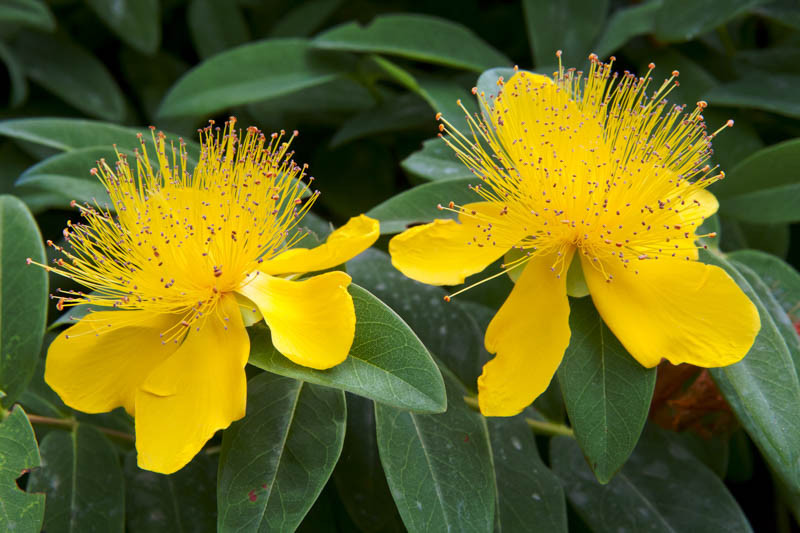
The plant is easily recognized by its bright yellow, five-petaled flowers that bloom from late June through August. When the flowers are crushed, they release a distinctive red pigment — a telltale sign of the hypericin compounds that give this plant its remarkable medicinal properties. The leaves, when held up to light, reveal tiny translucent dots (oil glands), which is why the species is named “perforatum.”
Traditional Uses in Georgian Medicine
Georgian folk medicine has utilized Hypericum for centuries, long before modern science began to study its properties. Traditional Georgian healers prescribed Krazana for a wide range of conditions:
- Mood and emotional well-being: Infusions of Hypericum were given to individuals suffering from melancholy, anxiety, and seasonal sadness — uses that align remarkably well with modern clinical findings
- Wound healing: Hypericum oil, made by steeping the flowers in olive oil, was applied topically to burns, cuts, and bruises to accelerate healing
- Nerve pain: The plant was used to treat neuralgia and sciatica, with poultices applied directly to affected areas
- Digestive health: Mild teas were brewed to soothe stomach ailments and improve appetite
These traditional applications, passed down through generations of Georgian herbalists, represent centuries of empirical observation that modern research continues to validate.
Modern Clinical Research
Hypericum is one of the most extensively researched medicinal plants in the world. Over the past three decades, hundreds of clinical trials have examined its efficacy and safety:
- Mild to moderate depression: Multiple meta-analyses have confirmed that Hypericum extracts are significantly more effective than placebo for treating mild to moderate depression, with efficacy comparable to standard SSRIs but with fewer side effects
- Anti-inflammatory activity: Studies have demonstrated potent anti-inflammatory properties, supporting its traditional use for wound healing and skin conditions
- Antimicrobial effects: Research has shown activity against a broad spectrum of bacteria, including antibiotic-resistant strains
- Neuroprotective potential: Emerging research suggests possible benefits for neurodegenerative conditions, though more studies are needed
Active Compounds
The therapeutic power of Hypericum comes from a complex interplay of bioactive compounds:
- Hypericin: The signature red pigment responsible for much of the plant’s antidepressant and antiviral activity. It works by modulating neurotransmitter levels in the brain, including serotonin, dopamine, and norepinephrine
- Hyperforin: A potent antibacterial and anti-inflammatory compound that also contributes to antidepressant effects by inhibiting the reuptake of multiple neurotransmitters
- Flavonoids: Including rutin, quercetin, and kaempferol, which provide antioxidant protection and support cardiovascular health
- Essential oils: Containing terpenes and sesquiterpenes that contribute to the plant’s anti-inflammatory and calming properties
Quality Factors: What to Look for in a Supplier
Not all Hypericum is created equal. The quality and potency of the final product depend heavily on several factors:
- Harvest timing: The plant must be harvested during peak flowering (late June to early August) when hypericin and hyperforin concentrations are highest
- Elevation: Plants grown at higher altitudes (above 1,000 meters) typically develop higher concentrations of active compounds due to increased UV exposure
- Drying methods: Proper shade-drying preserves the delicate bioactive compounds, while excessive heat or sunlight can degrade them — see how we wild-harvest and dry medicinal plants
- Storage conditions: Dried Hypericum must be stored in cool, dark, and dry conditions to maintain potency
Why Georgian Hypericum?
Georgian Hypericum stands out in the global market for several compelling reasons. The country’s mountain slopes provide an ideal growing environment, with intense sunlight at altitude driving higher hypericin production. The mineral-rich volcanic soils of the Caucasus region contribute to a richer phytochemical profile compared to lowland-grown specimens.
Perhaps most importantly, Georgia’s long tradition of Hypericum harvesting means that local collectors possess deep knowledge of optimal harvesting times, locations, and techniques — knowledge that directly translates to superior product quality. We make the wider case for the region in why source medicinal herbs from Georgia, part of our broader look at the medicinal plants of Georgia.
Partner with BioGroup
BioGroup wild-harvests Hypericum directly from the mountains of Samtskhe-Javakheti, Georgia, with careful handling and full traceability to the harvest area from collection through export. Our Hypericum products are available in dried whole herb, cut and sifted, and powdered forms.
Explore our Hypericum product page for detailed specifications, or contact us to discuss your sourcing requirements.